
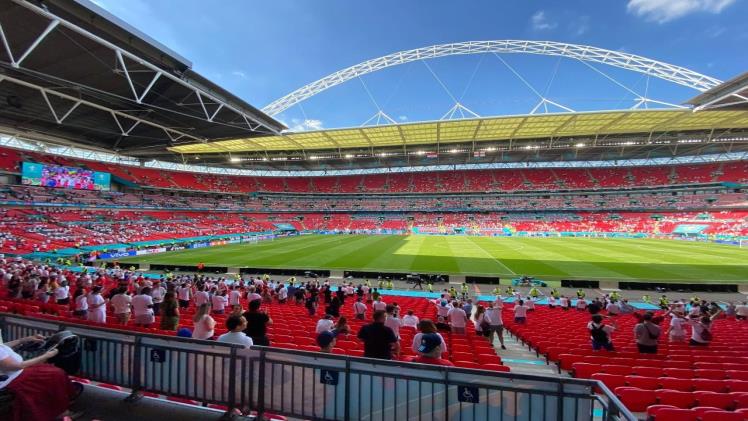
Figure 1 The home of soccer
Every soccer fan will have their own opinion. For the supporters who go to every game to cheer on their team, the only place to be is in their own stadium. It doesn’t matter whether they support PSG or a lower-level team with only one stand, the best soccer stadium in the world will be theirs.
But for everyone else who enjoys soccer on a less partisan basis, visiting some of the most famous stadiums in the world is part of the bucket list. There are as many different reasons for visiting soccer grounds as there are opinions on which one is the best.
The best betting sites in the country will give you a good idea of how the games might go. But read on to discover seven soccer stadia that regularly feature on must-visit lists of fans.
Wembley Stadium, London
Where else to start but with the home of soccer? The Wembley Stadium we know today is actually the second version though. This latest incarnation was built on the site of the original stadium and was opened in 2007. The original hosted its first-ever game way back in 1923.
The modern game was invented in England, so it seems only right that a visit to the national stadium is on order. With a top capacity of 90,000, the atmosphere will be electric. But you may find it difficult to get a ticket. Only cup finals and the England national team call this place home and they are the biggest games in the country. You could always try watching rugby league or NFL football here though.
Camp Nou, Barcelona
One of the most iconic soccer stadiums in the world, the Camp Nou can be found in Barcelona and is home to one of the most celebrated teams in European soccer. Barcelona battles annually against its great rival Real Madrid for the La Liga title in Spain – and has enjoyed much continental success as well.
With a capacity of just under 100,000, it is the third largest soccer stadium in the world and has been used for a number of top cup finals as well as the 1982 FIFA World Cup. You need to hurry to catch it in its present form though. The Camp Nou has been redeveloped a number of times over the years and the third tier will be completely demolished to be ready for another brand new look in 2025.
La Bombonera, Buenos Aires
Many of the big European soccer clubs have refurbished stadia these days, with all the hi-tech elements that the modern fan has come to expect. But sometimes a stadium’s soul is the most important part – and the Estadio Alberto J. Almondo in Buenos Aires certainly has plenty of that.
Home of Boca Juniors, it is better known as La Bombonera, or “chocolate box” in English, thanks to its unique architecture. Three steep, curved stands are joined by a lone flat stand on the remaining side. The passion of the crowd is legendary and the whole place is known to shake during games when the fans really get going. With a capacity of 48,000, this is another iconic venue that it is tough to find a ticket for.
Westfalenstadion, Dortmund
When it comes to soccer, the attraction is not just the skill and talent of the players on the field, but of the atmosphere and the fans. The noise that a crowd can make through singing is incredible at the biggest clubs and not much comes close to the famous Yellow Wall at the Westfalenstadion.
Borussia Dortmund may not be the most successful team in Germany, but its stadium is the biggest and the 24,000 that stand on the Südtribüne (South Bank) put on a show every single game that makes other fans want to visit. The fans make this one of the most intimidating home atmospheres in Europe and create an unforgettable atmosphere.
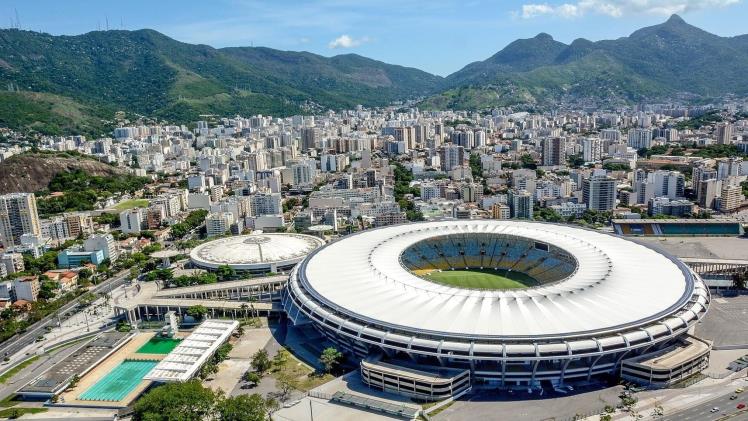
Maracanã, Rio de Janeiro
There is an old saying in soccer that the game was invented in England – but perfected in Brazil. The nation is the most successful in the world, winning five FIFA World Cups, among countless other awards and, even though games are played throughout the country, the Maracanã is considered the home of the Seleção.
It was built for the 1950 World Cup, one that Brazil infamously lost to Uruguay, and was originally able to hold 150,000 fans. The official capacity has changed over the years and now around 75,000 can fit in. Local teams Flamengo and Fluminense also call the place home, so a ticket is not quite as difficult to come by as for some of the other places on our list.
Estadio BBVA, Monterrey
Many soccer fans will immediately think of the iconic Estadio Azteca in the nation’s capital when Mexico is mentioned. After all, it has been the venue of some of the most famous games and has a special place in the game’s history. But we are going to go with a more modern structure.
Home of Monterrey of Liga MX, the Estadio BBVA is nicknamed “The Steel Giant” and helps create one of the most passionate atmospheres in soccer. The capacity may only be just over 53,000 but the proximity of the fans to the field (the absolute minimum distance allowed by FIFA) makes for an exhilarating experience. The stadium’s design is also inspired by the mountains that can be seen from the stands.
Mercedes-Benz Stadium, Atlanta
Our final must-visit stadium shows that it is not always tradition and history that counts when it comes to incredible soccer venues. The Mercedes-Benz Stadium in Atlanta was only opened in 2017 and is shared by the local MLS team with the Atlanta Falcons of the NFL.
Unlike other ground shares that have treated the soccer side of the partnership of the equation as an afterthought (we’re looking at you NYCFC), this replacement for the Georgia Dome was built with soccer and football in mind. The eight-piece retractable roof can open and close in just ten minutes and, if you miss any action, you can catch a replay on the 63,000-square-foot LED screen above the field.
