
The rise of smartphones has made mobile phone power consumption rise rapidly, while cost and battery technology have limited battery life, when there is no way to solve the battery life problem, providing users with faster charging speed seems to be the natural way to solve the problem of mobile phone standby, in this context, Now the mobile phone fast charging technology is more and more used and favored by mobile phone manufacturers. In this blog, we’ll discuss the highlights and defects of the current fast-charging technology.
The Highlights of the Current Fast Charging Technology
Fast-charge Technology Principle
The basic condition of battery charging is that the charger voltage should be higher than the battery voltage to overcome the battery voltage so that it can produce a charging current and complete the charge transfer process. The core of the battery is still lithium-ion, and most manufacturers are basically “open source” and “throttling” two ways – battery manufacturers are trying to improve energy density and increase capacity, and chip manufacturers are seeking low-power solutions, but both are capped: the former is limited by mobile phone portability, and the latter is limited by technology. Since the effect of open source and throttling is not obvious, manufacturers have begun to use a “euphemistic” solution: improve the charging speed of mobile phones, from the regular 1-2 hours to become shorter, to reduce the cost of charging time, in exchange for convenience.
Three Principles of Current Mode
High voltage constant current mode: The charging process of the general mobile phone is to first reduce the 220V voltage to 5V charger voltage, 5V charger voltage, and then to 4.2V battery voltage. During the whole charging process, if the voltage is increased, heat energy is generated, so when charging, the charger will heat up, and the phone will heat up. And the greater the power consumption, the greater the damage to the battery; Low voltage and high current mode: in the case of a certain voltage, increase the current, and you can use the parallel circuit to shunt, under constant voltage, the smaller the pressure shared by each circuit after the parallel shunt, and the same processing in the mobile phone, the smaller the pressure endured by each circuit; High voltage high current mode: This way can increase the current and voltage at the same time, we can know that this way is the best way to increase the power, but increase the voltage at the same time will produce more heat energy, so that the energy consumed is more, and the voltage and current is not unlimited at will increase. These three methods have a common problem, that is, higher requirements for the charger, the phone, and the electronic components of the charging data line. The fast charge technology on the market is based on the above three methods for technical research.
HONOR SuperCharge
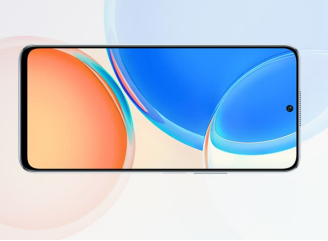
With HONOR SuperCharge, a 10-minute charge brings 3 hours of video playback. HONOR X8, which uses this SuperCharge technology, effectively charges in a short time. Fast charging technology can not only speed up the charging speed, and improve efficiency, but also affect the battery life, extend the battery life, and increase the durability of the mobile phone.
Conclusion
Nowadays, the battery technology of mobile phones is in a stage of rapid development, and there are breakthroughs in battery charging technology from time to time. However, it is worth noting that when charging the mobile phone, please use the original charger, otherwise, no matter how good the charging technology is, it cannot protect and extend the use efficiency of the mobile phone. Thanks for reading!
